
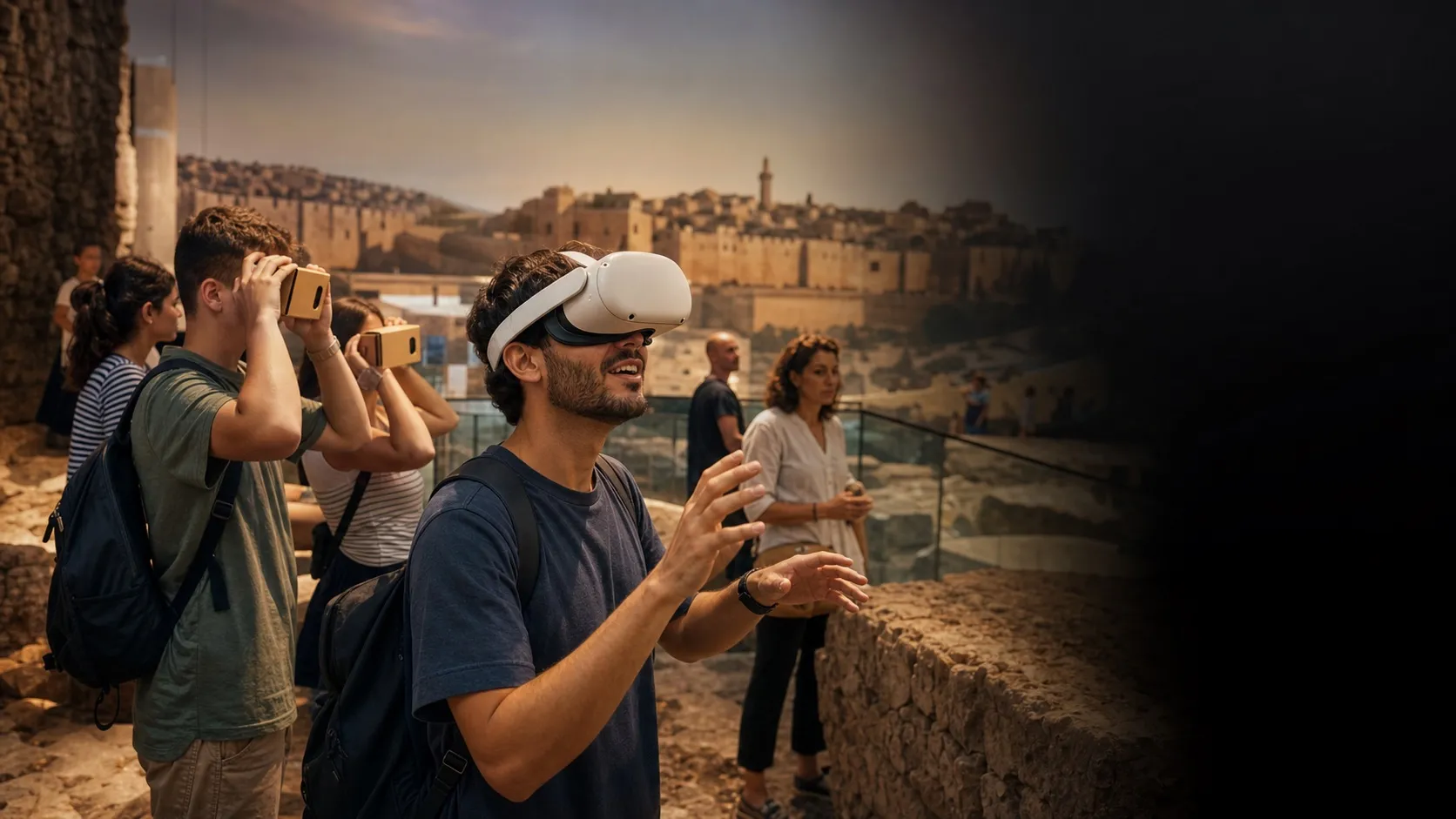
Interactive visit map
Rooms, points of interest, exhibits, guide stations and views are connected inside one 360 flow.
The visit does not have to end at the exit. BEPO360 turns an exhibition, visitor center or place-based story into a branded 360 experience visitors can open on-site, on mobile, on Oculus Quest and through branded Cardboard they take home.
Instead of another information page or one-way video, visitors enter a clear 360 path: choose areas, open points of interest, hear explanations, compare archive and current visuals, and share the experience after the visit.
Rooms, points of interest, exhibits, guide stations and views are connected inside one 360 flow.
Video, audio, archive images, before-and-after content and downloads become short, clear explanations.
Hebrew and English in the same experience, with room to expand to additional languages.
Start from existing materials and improve gradually: upload photos, video, text and points of interest, add 360 media or AI-generated atmosphere images, and bring in professional 360 capture when needed.
Book a content callPresentations, videos, photos, maps, text and links become layers inside the tour.
Generate atmosphere images, backgrounds and supporting scenes when full capture is not available yet.
For key rooms, new exhibitions or launches, professional 360 photography can be added.
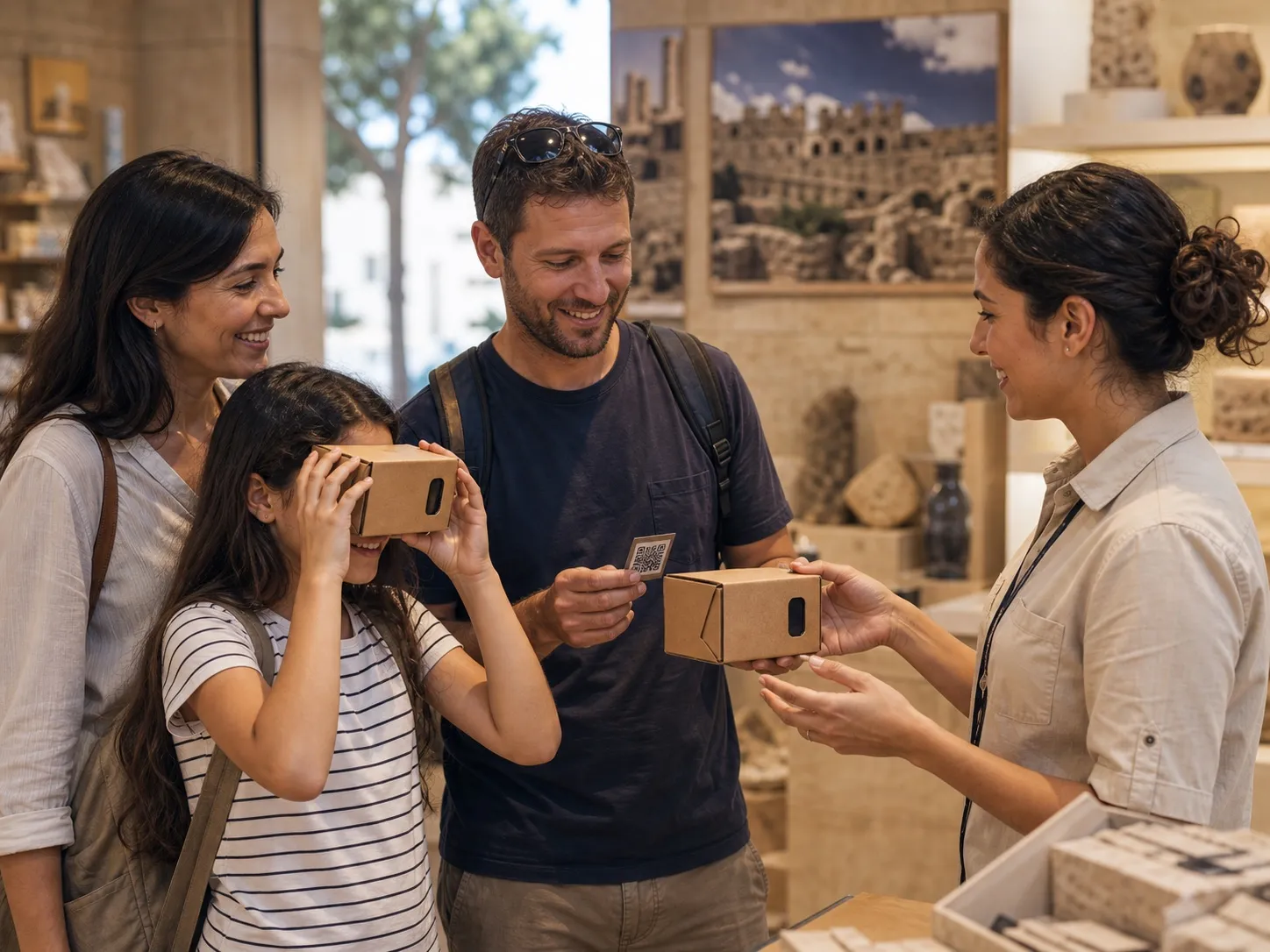
Cardboard is a simple cardboard VR viewer that holds a phone. At the end of the visit, you can give or sell it as a branded takeaway with a QR linked to the experience, so visitors can reopen the same 360 tour at home, show it to family and return to the story after leaving the venue.
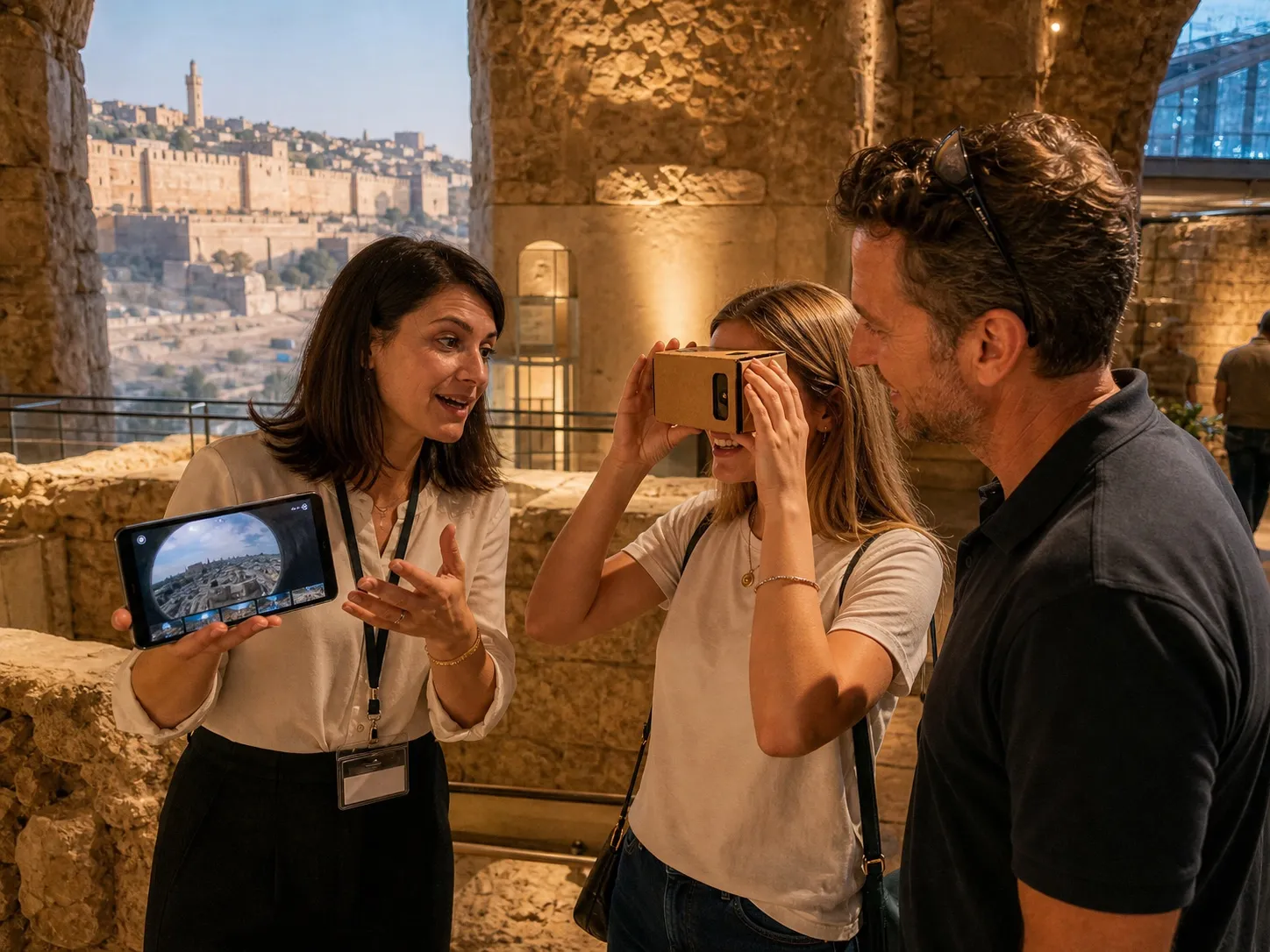
Turn the content you already have into a 360 lesson, tour or activity that can run in the museum, visitor center, classroom or outreach event. Visitors do not just hear an explanation - they step into the place, see the story and understand it through an immersive experience.
Launch a useful first version, then expand areas, languages and content at the pace that fits the venue.
Define audience, key areas, languages and usage point: on-site, at home or both.
Upload media, add points of interest, branding, QR codes and Cardboard connection when needed.
Test on mobile, screen, Quest and Cardboard, then prepare the share link or website embed.
In the next development phase, an AI guide could adapt the explanation to the person in front of it: a child would get a short, curious story; a tourist would get clear context in accessible language; and a guide or professional visitor could open deeper layers and follow-up questions.
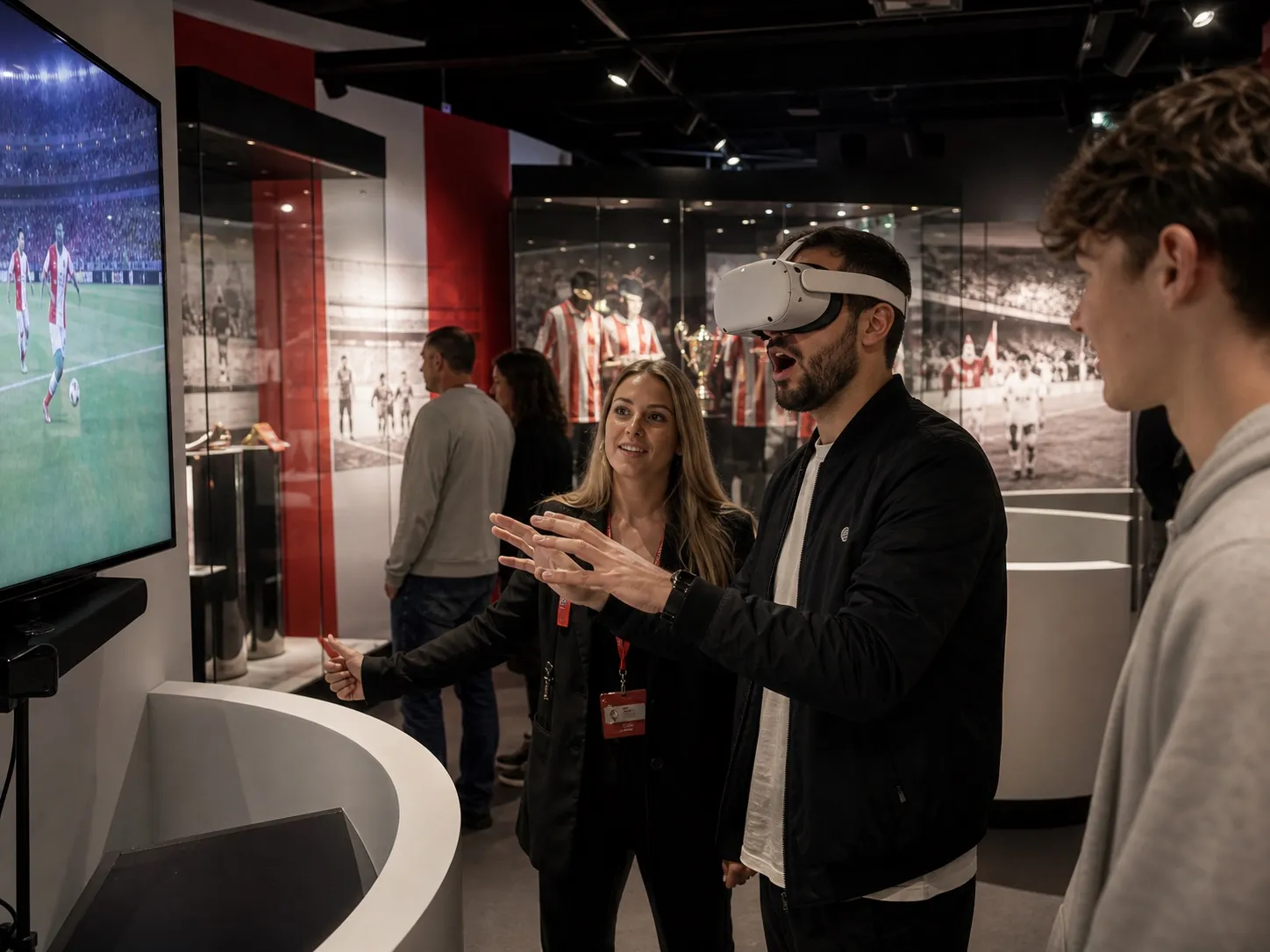
In a short online meeting, we review your venue, audience and existing content, then suggest a first version your team can test without changing the full exhibition setup.
Short call, first fit and live demo.